How to Install a Generator in a 5th Wheel?
Fifth wheel owners deal with a real tension: you want the flexibility to camp off-grid, but running on battery alone gets limiting fast. An onboard generator solves that, but the installation isn’t as simple as bolting a unit to the frame and running a cord. There are fuel lines, exhaust routing, load calculations, and electrical connections that all have to work together correctly.
Most fifth wheels come with a dedicated generator compartment — usually a vented bay near the front of the trailer that keeps the exhaust away from living areas. If your rig has one of those, you’re starting from a reasonable position. If it doesn’t, you’ll need to build or modify a compartment before you do anything else. That compartment needs forced ventilation (typically a duct fan), a drain path for any condensation, and metal or fire-resistant lining. Plastic RV cabinetry alone won’t cut it.
The generator itself has to be sized right. A common mistake I see is people buying whatever fits the space instead of calculating what they actually need to power. Add up the wattage of your air conditioner (most 13,500 BTU units pull around 1,800–2,000 watts at startup), refrigerator, microwave, and any other loads you plan to run simultaneously. A 3,500–4,000 watt generator covers most single-AC fifth wheels comfortably. Dual AC setups typically need 6,000–7,000 watts minimum.
For fuel, you’ll choose between gasoline, propane, or diesel. Propane makes a lot of sense in an RV context since most fifth wheels already carry a propane supply for the range and furnace. A dual-fuel generator that runs on propane can tap directly into that supply line through a properly rated T-fitting and shutoff valve, which eliminates the need for a separate fuel tank. If you go gasoline or diesel, you need a dedicated, properly vented tank mounted securely to the frame.
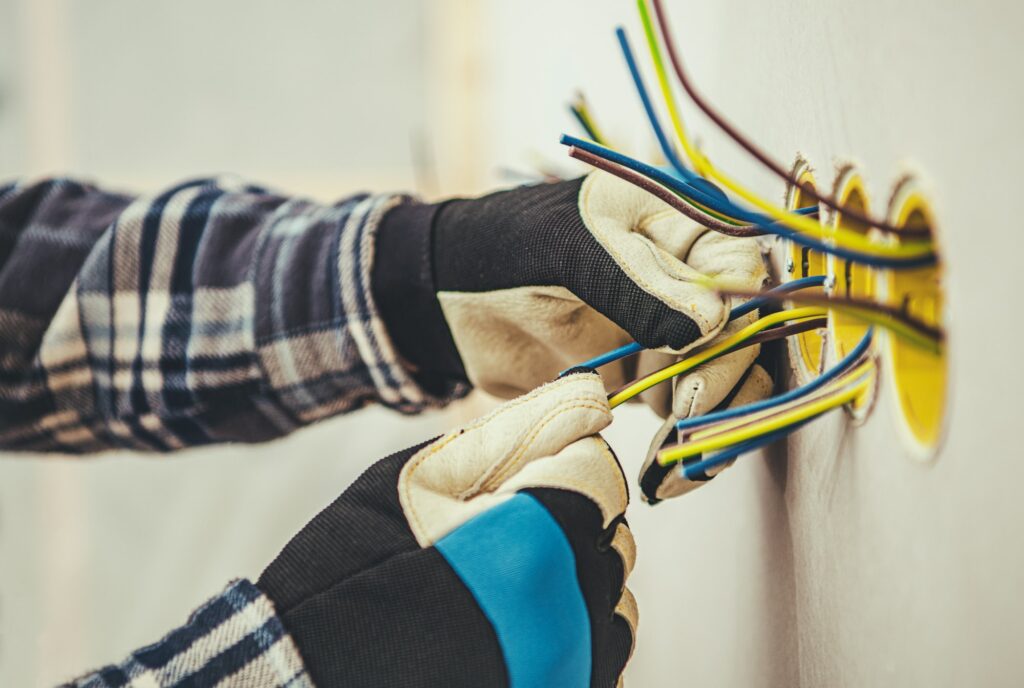
The electrical connection is where this gets serious. Most RV generators connect through a 30-amp or 50-amp shore power inlet, and many fifth wheels have an internal transfer switch or automatic transfer relay already wired for generator use. You connect the generator’s output to that inlet through a twist-lock cord or hardwired connection, and the transfer switch routes power to your coach. If your rig doesn’t have a transfer switch, you need one installed before you connect the generator to any household circuits. Running generator power without a transfer switch risks backfeed, which is a safety hazard for anyone who might touch the shore power cord.
Ground the generator per the manufacturer’s spec. In an RV application, this typically means bonding the generator frame to the trailer chassis. Exhaust must exit the compartment through a metal pipe routed away from windows, vents, and any occupied space — carbon monoxide poisoning in RVs is well-documented and preventable. The Occupational Safety and Health Administration has clear guidance on generator exhaust requirements that apply whether you’re on a job site or in a campground.
Once everything is connected, test at no load first, then add loads incrementally. Listen for hesitation or voltage drop on startup. If your air conditioner struggles to start, a soft-start kit on the AC compressor can drop the startup amperage draw by 50–65%, which is one of the most useful upgrades I consistently recommend to fifth wheel owners.
How Much Does It Cost to Install a Whole House Generator?
This question comes up constantly, and the honest answer is that the range is wide enough to be frustrating: anywhere from $3,000 on the low end for a modest 10–12 kW air-cooled unit with a simple installation, to $20,000 or more for a large liquid-cooled standby system with a full-house transfer switch and significant electrical panel work.
What drives the cost? The generator itself accounts for roughly 40–60% of the total. A 10 kW Generac air-cooled unit runs around $2,000–$2,500 for the equipment alone. A 22 kW unit runs $3,500–$5,000. Liquid-cooled models in the 48 kW range can hit $12,000 just for the hardware.
Labor is the other major variable. Most licensed electricians bill $100–$175 per hour in 2026, and a standard whole-house installation takes 8–16 hours across an electrician and sometimes a plumber (if gas line work is needed). Permits add $150–$500 depending on your municipality.
Then there are site-specific costs. If your electrical panel needs to be upgraded to accommodate the transfer switch and new loads, that’s an additional $1,500–$3,000 for electrical panel installation. Concrete pad for the generator? Add $300–$600. Long gas line run? Could be another $500–$2,000.
In my experience doing generator installations in the Reno-Sparks area, the projects that blow budgets are almost always the ones where the homeowner didn’t account for panel work, gas line distance, or permit fees. Get a detailed written quote that itemizes each of those categories before you commit.
How to Install a Generac Generator Transfer Switch?
A transfer switch is the device that disconnects your home from utility power and connects it to generator power — and back again when the grid returns. Skipping it isn’t an option if you’re hardwiring a standby generator. The National Electrical Contractors Association and the National Electrical Code (NEC) both require it for permanently installed generators.
Generac’s two most common transfer switch products are their Smart Transfer Switch (which handles the whole panel) and their load-center-style switches that protect selected circuits. The Smart Switch is the more common choice for whole-house standby systems; the load-center version makes sense for homeowners who want to cover just the critical circuits like the refrigerator, furnace, lights, and one or two outlets.
Here’s how a transfer switch installation actually goes. First, the electrician shuts off the main breaker and confirms the panel is dead with a meter. Then they install the transfer switch assembly — either adjacent to the existing panel or as a replacement for it, depending on the model. The existing panel’s main breaker feeds into the transfer switch, and the transfer switch outputs to both the utility side and the generator side through interlocked breakers that physically cannot both be closed at the same time. That interlock is the safety mechanism that prevents backfeed.
The generator’s output cable runs from the generator to the transfer switch. For a 22 kW Generac, that’s typically a 100-amp connection on a #3 AWG copper or #1 AWG aluminum cable run in conduit. The ATS (automatic transfer switch) also requires a low-voltage control cable from the generator to the switch so the generator’s controller can signal when it’s ready to accept load.
After wiring, the electrician programs the transfer switch for the correct exercise schedule (most Generac systems default to a 12-minute weekly test cycle), sets the voltage and frequency thresholds for transfer, and tests automatic operation by pulling the main breaker to simulate an outage. The generator should start within 10–30 seconds and transfer load cleanly.
This is not a DIY job. The panel work involves working within inches of live bus bars even with the main breaker off, because the utility side of the panel remains energized until the utility company physically disconnects your meter. A licensed electrician with specific generator experience handles this safely and correctly.
Who Sells and Installs Generac Generators Near Me?
Generac has a dealer locator on their website at generac.com that lets you search by zip code for authorized dealers and installers. Authorized Generac dealers matter because they’ve been trained on Generac’s products, have access to warranty parts, and can register your equipment for the full warranty — which as of 2026 is five years on residential air-cooled units.
What you’ll find through that locator are a mix of business types: dedicated generator dealers who do nothing else, HVAC companies that added generators as a service line, and electrical contractors who are authorized Generac installers. In my opinion, electrical contractors are usually the strongest option for the installation itself. The electrical work is the most technically demanding part of the project, and an electrician who does this work daily will be faster and more thorough than a generalist.
When you’re evaluating a company, ask these questions directly. How many Generac installations have you completed this year? Do you pull the permit, or does the homeowner have to handle that? Who do I call if there’s a problem after installation? A company that hesitates or gives vague answers to those questions is worth skipping.
Also check their licensing status. In Nevada, electrical contractors must hold a C-2 electrical license from the Nevada State Contractors Board. You can verify any contractor’s license at nvcontractorsboard.nv.gov. Don’t skip this step.
At Ohms Electric Reno & Sparks, we handle both the electrical installation and permit process for generator projects in the Reno-Sparks area, so homeowners aren’t juggling multiple contractors or figuring out permit applications on their own. You can see our full generator installation services for specifics on what we cover.
Who Installs Generac Generators Near Me?
Beyond the Generac dealer locator, a few other reliable ways to find qualified Generac installers: the Independent Electrical Contractors directory lists licensed electrical contractors by state and specialty, and many members specialize in standby power. Angi and HomeAdvisor have installer listings, but vet those candidates carefully — read the reviews with specific attention to whether reviewers mention permits, timeline, and post-installation service.
One thing to watch: some companies list themselves as Generac installers but subcontract the electrical work to a different company. That’s not necessarily a problem, but you should know who will actually be doing the wiring and confirm that person is licensed. Ask for the license number of whoever pulls the permit, because the permit applicant is the party legally responsible for the work.
In 2026, generator demand in Nevada has stayed high following the grid reliability issues of recent summers. That means installer schedules book out 4–8 weeks in some cases. If you’re buying a generator ahead of a specific season or event, plan accordingly. A reputable installer would rather be honest about their timeline than overpromise and leave you waiting with equipment sitting in a driveway.
The Electrical Association also maintains resources on finding qualified electrical contractors, which can be a useful second verification if you want to cross-check a company’s credentials.
Who Installs Generators Near Me?
If you’re not locked into Generac specifically and are open to other brands — Kohler, Briggs & Stratton, Cummins, Honda — the search broadens. All of those manufacturers have their own dealer and installer networks, and independent electrical contractors who install generators can often work with multiple brands.
For standby generators (the kind that install permanently and run on natural gas or propane), you’ll almost always need a licensed electrical contractor and possibly a licensed plumber for the gas line. For portable generators that hardwire through a manual transfer switch, the work is primarily electrical. Either way, the electrical contractor is the key person to hire.
When searching locally, the most reliable approach in 2026 is still a combination of the manufacturer’s dealer locator plus a Google search for licensed electrical contractors in your area who list generator work specifically. Look at the portfolio photos on their website — do they show actual generator installations or generic stock photos? That tells you something.
Questions to ask any installer before hiring them: Are you licensed and insured? Will you pull the permit? Do you offer a warranty on labor separate from the manufacturer’s equipment warranty? What’s your typical timeline from contract signing to completed installation? And for standby systems: what does your annual maintenance plan look like?
At Ohms Electric Reno & Sparks, we install standby generators across Reno, Sparks, and surrounding Northern Nevada communities. Our services page covers the full scope of electrical work we handle, and generator installation is a core part of our residential work. We pull permits, coordinate inspections, and stand behind our labor.
Frequently Asked Questions
Can I Install a Generator in My 5th Wheel Myself?
The mechanical work — mounting the unit, routing exhaust — is something experienced DIYers handle. The electrical connections to your coach’s transfer switch or shore power system should be done or at minimum inspected by a licensed electrician. An incorrect connection can damage your coach’s electrical system or create a shock hazard.
What Size Generator Do I Need for a 5th Wheel?
For a single rooftop AC unit, a 3,500–4,000 watt generator is usually sufficient. Two AC units typically requires 6,000–7,000 watts. If you’re running a residential refrigerator, factor in its startup surge as well. Always size for your peak simultaneous load, not your average consumption.
How Long Does a Whole House Generator Installation Take?
For a straightforward installation — good panel access, gas line nearby, no major obstacles — most licensed electrical contractors complete the work in one full day. Projects requiring panel upgrades, long gas line runs, or difficult conduit routing may take two days.
Does a Standby Generator Add Value to a Home?
Several real estate appraisal studies have found that a whole-house standby generator adds 3–5% to resale value in markets where power outages are common. In Nevada, where summer heat makes outages genuinely dangerous, buyers notice these systems.
Do I Need a Permit to Install a Generator?
Yes, in virtually every jurisdiction. Both the generator connection and the transfer switch installation require electrical permits. Your contractor should pull these permits as part of the job. If a contractor offers to skip the permit to save money or time, walk away.
—
If you’re in the Reno-Sparks area and ready to move forward with a generator installation — whether for a fifth wheel, a whole-house standby system, or anything in between — contact us at Ohms Electric to schedule a site visit and get a detailed quote. We’ll assess your specific situation, handle the permits, and make sure the installation is done right the first time. You can also browse our generator installation services to see what a typical project looks like from start to finish.
Written by Chris Paras. Read more about the author.